About
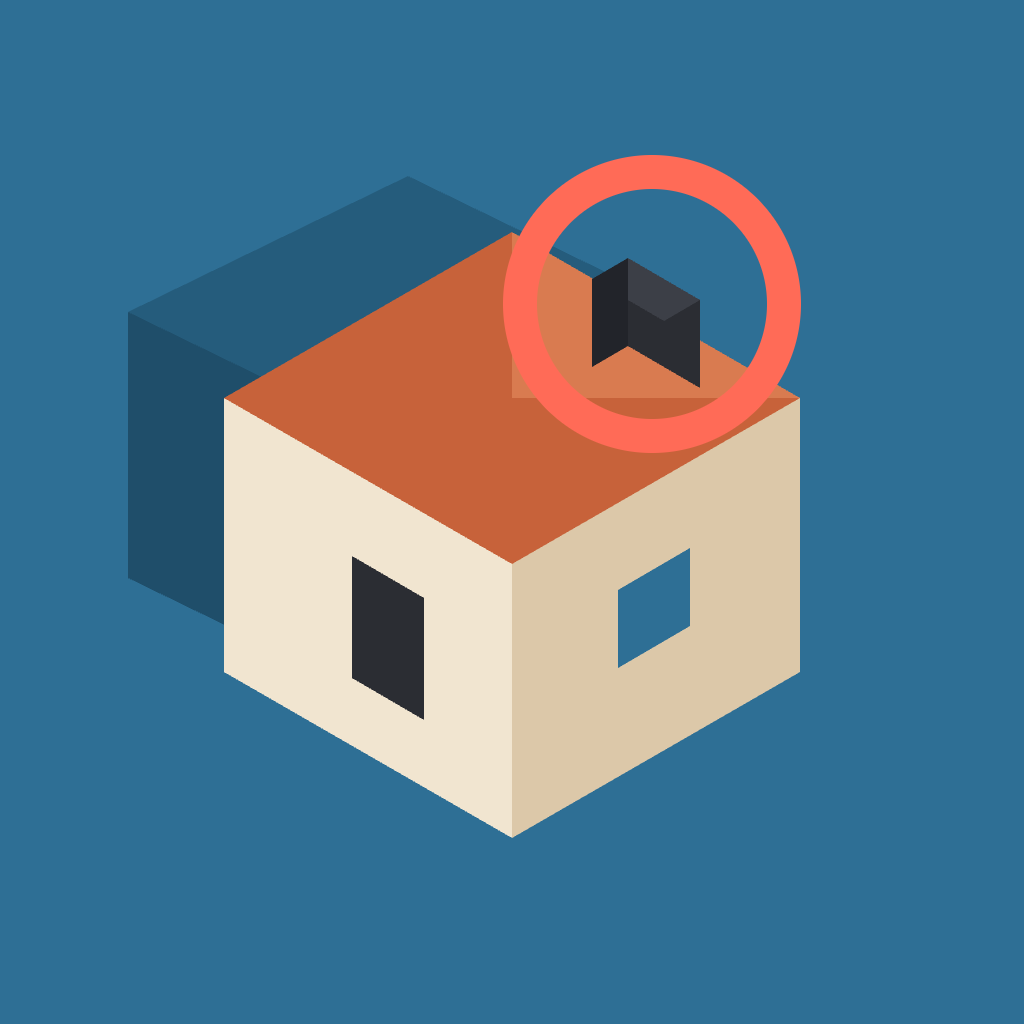
Every other spot the difference game hands you two flat pictures. Doubletake hands you two little models. Two copies of a small papercraft diorama, a harbour, a village square, a farm, a market, a workshop yard or a garden, sit one above the other with five things changed between them, and you drag anywhere to turn both of them together. That is the whole point: a missing barrel can sit behind the lighthouse and a moved crate can hide under an awning, so finding a difference becomes an act of looking rather than scanning. Nothing is painted in advance either. Every scene is built by the game from a number, roads first, buildings on the lots, clutter last, then five careful edits, which is why the scenes never run out. The fairness is not a promise, it is a measurement: before a scene is shown, the game projects the geometry and checks that every changed piece really is visible, from the front or from one of the eight angles you can turn to, that no two differences sit on top of each other, and that a colour change always changes the pattern as well, so the puzzle works without colour vision. A wrong tap costs nothing. There is no timer, no lives and no energy. The lens turns you toward something you missed and never marks it, and it is there on every scene. Six worlds with fifty numbered scenes each and as many more after that as you want, a streak mode called Sharp Eye, and one Daily Diorama a day, the same one for everybody. No advertising, no account, no server, and every scene built on your own phone.
Features
- Two papercraft dioramas you can turn, not two flat pictures
- Differences that hide behind buildings until you rotate the scene
- Every scene generated from a number, so they never run out
- Findability proven by geometry before a scene is ever shown
- Colour changes always change the pattern, for colour blind players
- No timer, no lives, no energy, and a free lens on every scene
- Six worlds, a Daily Diorama and a Sharp Eye streak mode
- Works entirely offline, with no account and no adverts